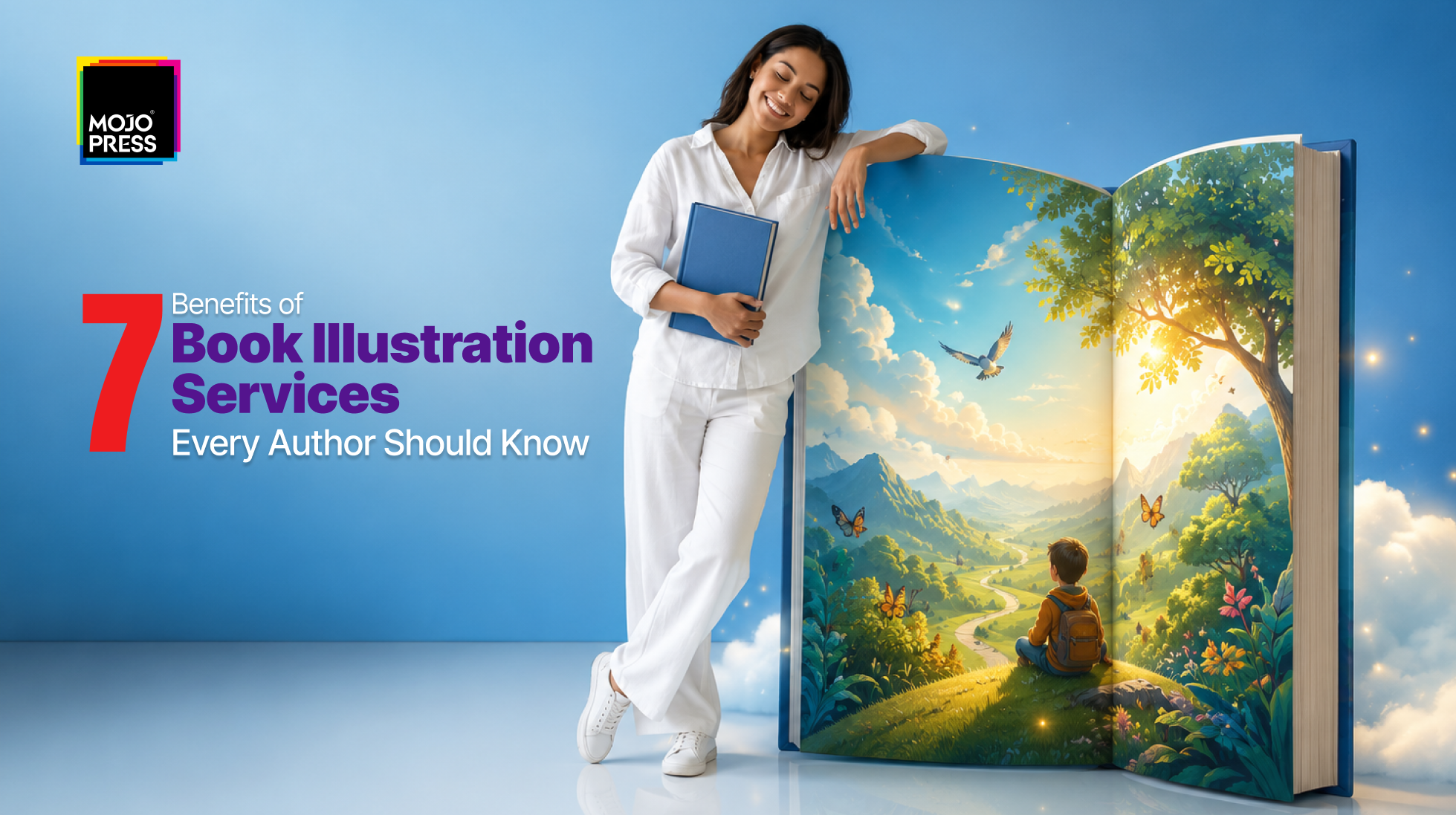
Readers form an opinion about a book within seconds of seeing it, whether they are browsing a shelf or scrolling a retail page. According to design platform Wixel, 79 percent of people make a split second decision about picking up a book based on its cover alone. A separate survey cited by Pandamonium Publishing House found that 57 percent of people buy books based on the cover, while 80 percent avoid a book for the same reason.
For first time authors, self published writers, and independent publishers, this makes illustration one of the highest leverage decisions in the entire publishing process. It is not a finishing touch applied at the end of a project. It is a strategic investment that affects sales, marketing, and how seriously a book is taken by readers, reviewers, and retailers. The sections below break down exactly why.
1 Illustrated Covers Increase Book Sales
The connection between cover quality and sales is one of the most measured relationships in independent publishing, and the data is consistent across multiple sources.
Kindlepreneur tracked the performance of covers across roughly 20,000 self published books and found that, in genre fiction such as romance, thriller, and fantasy, an on trend professional cover can account for as much as 50 percent of a book's sales performance.
A survey of self published authors, hosted on Goodreads and originally compiled by Bubblecow, found that a professionally designed cover alone was associated with an 18 percent increase in sales compared to authors who used a do it yourself cover.
Reedsy ran an A/B test on Facebook ads comparing original self designed covers against professionally redesigned ones, and found an average 35 percent increase in ad marketability for the professionally illustrated versions.
The pattern across all three data sources points to the same conclusion: illustration is not a cosmetic expense. It is one of the few investments an author can make that has a direct, measurable link to sales performance.
2 Illustration Helps Readers Understand Your Genre Instantly
Readers rely on visual cues to figure out what kind of book they are looking at before they read a single word of the description. Color palettes, typography, character posture, and imagery style all act as a kind of visual shorthand that tells a browsing reader whether a book is a cozy mystery, a dark thriller, or a middle grade adventure.
When illustration does not match genre expectations, it creates friction. A literary memoir with a cover styled like a fantasy novel will confuse potential readers and can even work against a book's placement in retail categories and recommendation algorithms, since online retailers also use cover style as a signal when grouping similar titles.
Genre Signaling in Practice
- Thriller and suspense: high contrast imagery, bold sans serif type, muted or dark palettes
- Romance: soft color gradients, character focused artwork, warmer tones
- Children's picture books: bright, high saturation colors, rounded shapes, expressive characters
- Literary fiction and memoir: minimalist composition, restrained typography, symbolic imagery
3 Illustration Plays a Central Role in Children's and Picture Books
For children's authors, illustration is not a support element. It is often half or more of the storytelling itself. Picture books rely on the interaction between text and image to carry plot, emotion, and pacing, particularly for pre reading and early reading audiences who are decoding meaning primarily through pictures.
The children's picture book segment continues to see steady global demand, with multiple industry market research firms placing the category in the multi billion dollar range and projecting continued growth over the next decade, driven largely by early literacy programs, school and library purchasing, and growing demand for diverse and personalized storybooks. Figures vary by research provider, but the underlying trend across sources is consistent: illustrated children's content remains a resilient and growing segment of the publishing industry.
Illustration to Text Ratio
In board books and early picture books, illustration can account for nearly all of the page, with only a few words of text per spread. As the intended reading age increases, the ratio shifts gradually toward more text, but illustration typically remains present through early chapter books to help bridge the transition to text heavy formats.
Is Your Book Ready? Let's Publish It!
Publish Your Book With Mojopress4 Illustration Improves Reader Engagement and Completion
The human brain processes visual information faster than text, which is part of why illustrated content tends to hold attention more effectively, particularly in formats like graphic novels, illustrated nonfiction, and fantasy novels that include maps or diagrams.
Internal illustrations, not just covers, can also improve the reading experience. Chapter opener art, maps in fantasy novels, diagrams in nonfiction, and spot illustrations in memoirs all give readers visual anchors that make longer works feel more approachable and easier to follow, which can support completion rates and positive reviews.
5 Professional Illustration Builds Author Credibility and Trust
Illustration quality is one of the fastest signals of authorial credibility available to a reader who has never heard of the author before. A polished, professionally illustrated book communicates that the author has invested real time and resources into the finished product, which builds trust before a single page is read.
This matters beyond individual readers as well. Literary agents, contest judges, library acquisition committees, and press reviewers form early impressions based on production quality, and a book that looks self made in a negative sense can be passed over regardless of how strong the writing inside is. Custom illustration, as opposed to generic stock imagery, also helps a book stand apart in a market where many competing titles use similar low cost visual templates.
6 Illustration Supports Broader Book Marketing and Merchandising
Illustration is not limited to the interior or cover of a book. Once created, illustrated assets can be repurposed across an author's entire marketing effort, including social media graphics, bookmarks, posters, launch event materials, and promotional merchandise.
This is one of the areas where illustration and marketing strategy overlap directly. A strong book marketing plan often relies on having flexible visual assets ready to adapt across platforms, from Instagram and Pinterest graphics to press kits and, increasingly, short form video content such as book trailers. Authors who invest in illustration early tend to have an easier time building out these campaigns later, since the core visual assets already exist and simply need to be adapted.
7 Custom Illustration Has Long Term Ownership and Licensing Value
When an author commissions original illustration, ownership of that artwork is typically negotiated as part of the contract, which means the author can retain rights to use the artwork well beyond the original publication.
This has practical value for series authors, who benefit from visual consistency across multiple books, as well as for authors planning future formats such as audiobooks, foreign language editions, or licensed merchandise. Custom illustration also protects against the risk associated with stock imagery, which can be used by other authors or businesses at the same time, undermining a book's visual uniqueness. Authors should always confirm illustration rights and usage terms in writing before a project begins.
How Much Do Book Illustration Services Typically Cost?
Illustration pricing varies widely and depends on several factors rather than a single flat rate:
- Genre and complexity of subject matter, such as realistic figures versus simple line art
- Number of illustrations required, from a single cover to a fully illustrated picture book
- Illustration style, including digital, hand drawn, or mixed media approaches
- Illustrator experience level and portfolio reputation
- Usage rights and licensing terms, particularly for commercial or merchandise use
Because of this variation, most professional book illustration services provide a quote after reviewing the specific manuscript and project scope rather than publishing a single fixed price.
Frequently Asked Questions
What is the difference between a book cover designer and a book illustrator?
A cover designer typically arranges layout, typography, and existing imagery into a finished cover, while an illustrator creates original artwork from scratch. Many projects use both, with an illustrator producing custom art that a designer then incorporates into the final cover layout.
Do all books need illustrations, or just children's books?
Children's books rely on illustration most heavily, but adult fiction and nonfiction also benefit from illustrated covers, and many genres such as fantasy, memoir, and narrative nonfiction use internal illustration such as maps, diagrams, or chapter art.
How long does it take to get a book illustrated?
Timelines depend on scope. A single custom cover illustration can often be completed in two to four weeks, while a fully illustrated picture book with twenty or more spreads can take two to four months, depending on the illustrator's availability and the number of revision rounds included.
Can I use AI generated illustrations instead of hiring an illustrator?
AI image tools exist and are sometimes used for early concept exploration, but many retailers, contests, and rights organizations have specific disclosure requirements around AI generated art, and AI tools currently have limited ability to maintain consistent character appearance across multiple illustrations, which matters for picture books and series. Authors should research current platform policies before deciding.
Who owns the rights to the illustrations once the book is published?
This depends entirely on the contract signed before work begins. Some illustrators retain copyright and license usage to the author, while others transfer full ownership for an agreed fee. Authors should clarify usage rights, including merchandise and adaptation rights, before starting a project.
How do I find the right illustration style for my book?
Reviewing bestselling and well reviewed titles in the same genre is a useful starting point, since it reveals current visual conventions readers already associate with that category. From there, authors can share reference images with an illustrator to align on style before full production begins.
Does illustration help with self publishing on Amazon KDP specifically?
Yes. On platforms like Amazon KDP, the cover thumbnail is one of the primary factors influencing whether a browsing reader clicks on a listing at all, since readers see a small image alongside dozens of competing titles. A weak or generic cover can suppress click through rates regardless of how strong the book description or reviews are.
Final Thoughts
Book illustration is often treated as a final step in the publishing process, something to handle quickly once the manuscript is finished. The data suggests the opposite approach serves authors better. From sales performance to genre signaling to long term licensing value, illustration touches nearly every part of how a book is discovered, judged, and remembered.
If you are preparing a manuscript for publication and want to talk through illustration options for your specific genre and budget, Mojopress's book illustration services team is available to walk through the process and provide a project specific quote.

Chris Wilson
Chris Wilson is a content strategist who has spent years helping independent authors and small publishing teams with manuscript positioning and launch marketing. Before publishing, they practiced contract law, an experience that shaped how they read every story, legal or literary. They write with the instincts of someone who actually reads books, not just markets them.